
By: Joseph Goldy, CFP®, CDFA®
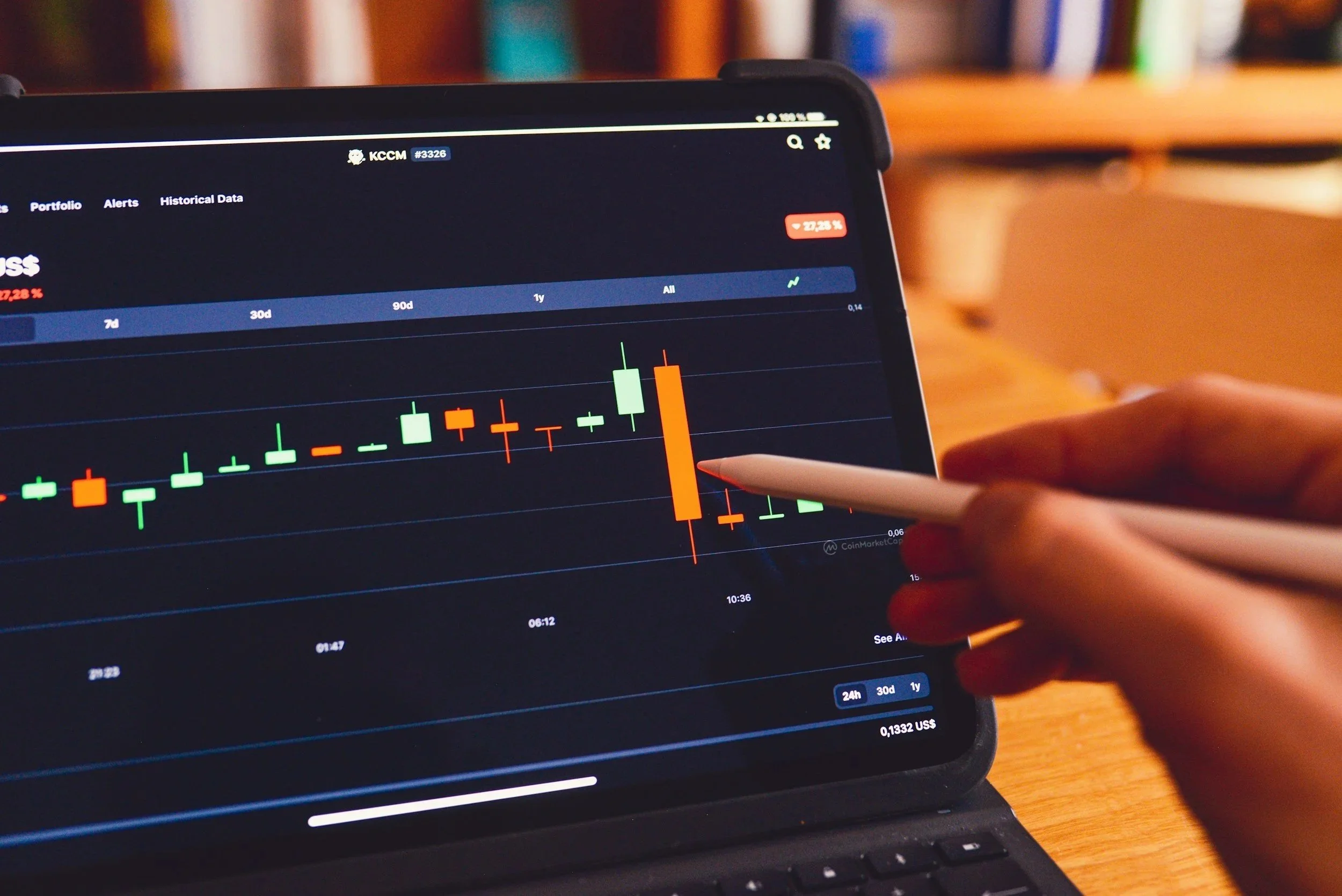
Every investor has felt it — that stomach-drop sensation when the market tumbles 3% in a single afternoon, or when headlines scream about economic uncertainty and your portfolio balance looks nothing like it did last week.
Here at HIGHLAND Financial Advisors, we've guided high-net-worth clients through enough market cycles to know one enduring truth: short-term volatility is the price of admission for long-term wealth creation. The investors who understand this don't just survive turbulent markets — they thrive through them.
Volatility Is Normal, Not Exceptional
Markets are not elevators moving smoothly upward. They are more like a golf game — full of unexpected hazards, errant shots, and frustrating detours — but the skilled player who stays focused on the scorecard at the end of 18 holes still walks off the course a winner.
Markets are no different. The VIX, Wall Street's widely followed "fear gauge," closed at 17.83 as recently as April 28, 2026, after spiking dramatically earlier in the year amid tariff concerns and geopolitical tensions.
Morningstar has noted that 2026 is expected to carry higher volatility than 2025 across the full year, driven by elevated valuations, policy uncertainty, and shifting global capital flows. Yet none of that changes the fundamental math of long-term compounding.
History is remarkably consistent on this point: when the VIX has reached 40 or higher — a level of genuine panic — the S&P 500 has posted gains one year later roughly 90% of the time, with an average increase of approximately 30%. That's not a coincidence; it's a reflection of what happens when disciplined investors hold the line while fearful ones sell at the worst possible moment.
The Danger of Reacting to the Noise
The greatest threat to a long-term financial plan isn't a bear market — it's an investor who reacts to one. Behavioral finance research consistently shows that the average investor dramatically underperforms the very funds they invest in, simply because they buy high in moments of euphoria and sell low in moments of panic. At HIGHLAND, we work closely with clients to build financial plans with enough structural integrity that short-term market dislocations don't require dramatic action. When a plan is built correctly, a 10% or even 20% drawdown is a data point, not a catastrophe.
The early months of 2026 illustrated this perfectly. Geopolitical tensions and tariff uncertainty sent markets reeling, with the Nasdaq-100 entering correction territory — defined as a drop of at least 10% from recent highs. Investors who panicked and moved to cash locked in those losses. Those who stayed invested, or better yet, rebalanced strategically, were positioned to capture the recovery.
A Plan Built for All Seasons
HIGHLAND’s planning philosophy centers on one foundational idea: your portfolio should reflect your life goals, not your emotional response to today's headlines. That means building diversified, tax-efficient portfolios that are stress-tested for volatility before the volatility arrives. It means holding appropriate cash reserves so clients never feel forced to sell equities at inopportune times. And it means maintaining a long time horizon as the true north star of every investment decision.
Schwab's 2026 Long-Term Capital Market Expectations underscore this approach, noting that the market fluctuations of 2025 — from Magnificent 7 pullbacks to dollar weakness — reinforced the critical importance of maintaining a well-diversified portfolio rather than chasing short-term trends. BlackRock similarly reminded investors entering 2026 that shifting market odds require a clear-eyed, forward-looking framework rather than a reactive one.
Staying the Course
Clients who have worked with HIGHLAND through multiple market cycles — the COVID crash of 2020, the rate-shock correction of 2022, the tariff turbulence of 2025 — share a common experience: they felt nervous in the moment, but grateful they didn't abandon their plan. That's the value of having a fiduciary advisor in your corner. Not to predict the market, but to keep you anchored to what matters: your financial independence, your family's security, and your long-term legacy.
Markets will always swing. Volatility will always return. The clients who come out ahead aren't the ones who avoided the storms—they're the ones who had a plan to weather them.
Joseph Goldy, CFP®, CDFA ®, is a wealth advisor and CERTIFIED FINANCIAL PLANNER™ at Highland Financial Advisors, LLC, a fee-only fiduciary wealth advisory firm based in Wayne, New Jersey.
Joe specializes in working with newly independent women because of divorce or losing a spouse. He understands firsthand the value of having a clear financial picture pre- and post-divorce and a plan to restate goals as a single person. When he is not helping clients, Joe enjoys spending time with his two sons outdoors and volunteering to help raise money for Type 1 diabetes organizations.
The foregoing content reflects the opinions of Highland Financial Advisors and is subject to change at any time without notice. Content provided herein is for informational purposes only and should not be used or construed as investment advice or a recommendation regarding the purchase or sale of any security. There is no guarantee that the statements, opinions, or forecasts provided herein will prove to be correct.
Past performance may not be indicative of future results. Indices are not available for direct investment. Any investor who attempts to mimic the performance of an index would incur fees and expenses, which would reduce returns.
Securities investing involves risk, including the potential for loss of principal. There is no assurance that any investment plan or strategy will be successful. HIGHLAND Financial Advisors is an independent, fee-only investment adviser based in New Jersey, serving high-net-worth clients with comprehensive financial planning. Learn more at highlandplanning.com.
The above article was written with the assistance of artificial intelligence (AI).