
By: Reed C. Fraasa, CFP®, AIF®, RLP®
A client asked me last week if she should buy SpaceX stock when it goes public. Another asked about OpenAI. A third brought up Anthropic. All three used the same word: “miss out.”
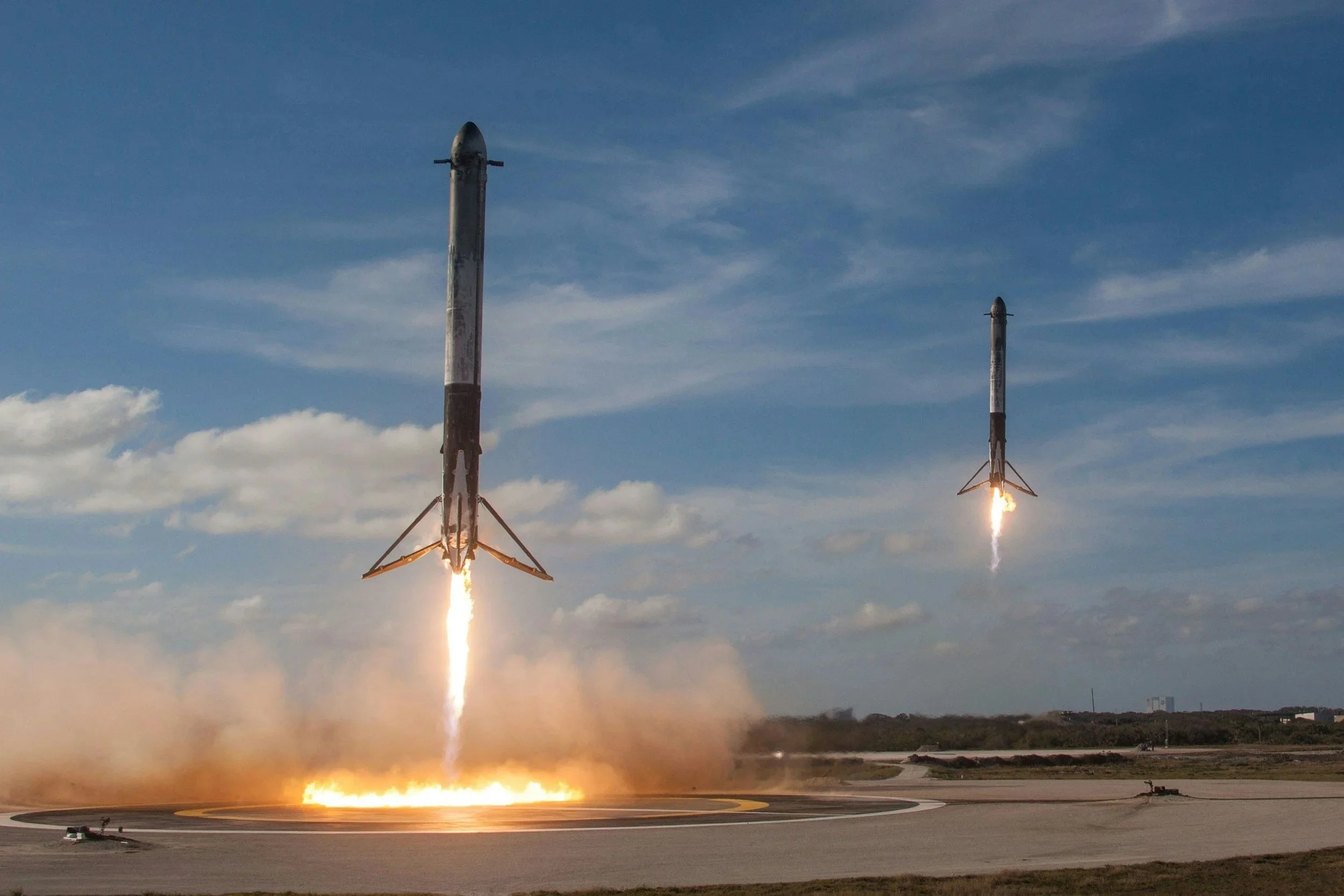
I get it. These are three of the most talked-about companies on the planet. SpaceX puts rockets into orbit and may soon put people on Mars. OpenAI built the tool that made “AI” a household word overnight. Anthropic, the company behind the Claude chatbot, is right behind them with its own blockbuster debut. When companies like this go public, the noise is deafening.
Here is what I told all three clients. You will soon own a piece of these companies. And you do not need to do anything about it.
The IPO Hype Machine
Initial public offerings create a strange kind of pressure. The story is everywhere. The valuation numbers are staggering. SpaceX is reportedly valued at nearly $1.75 trillion. OpenAI and Anthropic are each expected to debut in the trillion-dollar range as well. Numbers like that grab attention.
They also trigger fear. Fear of missing the next Amazon. Fear of watching from the sidelines while others get rich. That fear has a name. Behavioral economists call it FOMO — fear of missing out. It is one of the oldest tricks the market plays on investors.
FOMO does not care about your financial plan.
It does not ask whether the investment aligns with your goals, time horizon, or risk tolerance. It just whispers one thing. Everyone else is getting in. You should too—immediately.
The Slow, Unglamorous Truth About Index Investing
Most of you do not own individual stocks. You own diversified funds. Index funds. ETFs. Funds that track the S&P 500, the Nasdaq-100, or the total U.S. stock market.
Here is the part that surprises people. SpaceX, OpenAI, and Anthropic will not show up in those funds on day one.
Major indexes require a seasoning period before adding new companies. S&P Dow Jones Indices has stated that newly public mega-cap companies still need roughly twelve months of public trading history before they qualify for inclusion. Size alone does not buy a fast pass.
So for at least a year after these IPOs, your S&P 500 fund will not hold a single share of SpaceX, OpenAI, or Anthropic. Neither will your total market fund. The hype will run hot. Your fund will not move.
The Nasdaq-100 and FTSE Russell Fast Track Are Different
S&P held the line. Other index providers did not.
Nasdaq created a new fast lane. Big new IPOs can join the Nasdaq-100 within 15 trading days, instead of waiting three months. FTSE Russell cut its wait to five days.
SpaceX, OpenAI, and Anthropic all qualify. Funds tracking these indexes will own all three companies almost immediately, but only in small amounts. Here is why.
Index inclusion depends on float. Float is the slice of company shares actually available for the public to buy and sell. Founders, employees, and early investors hold the bulk of each company's stock, and they agree not to sell it right away. Only the shares sold in the IPO, plus any other shares already free to trade, count toward float.
For these three companies, that slice is small. SpaceX, for example, plans to sell less than 5 percent of its shares.
Small float plus heavy demand can mean a bumpy ride. Expect sharp price swings in the early weeks. As lockup agreements expire over the following months, more shares unlock, the float grows, and stock prices may move again.
This does not affect S&P 500 funds. It affects Nasdaq-100 and Russell index funds, as well as anyone buying these stocks directly on day one.
But Eventually, You Will Own Them
When these companies do get added to major indexes, your funds will buy them automatically. You will not place an order. You will not make a decision. The fund manager will simply rebalance, and a slice of SpaceX or OpenAI will appear in your account.
How big a slice? Look at Broadcom for a comparison. At a valuation of nearly $1.9 trillion, Broadcom ranks among the top ten holdings in Vanguard's total market fund, accounting for close to 3 percent of that fund's weight. SpaceX, at a similar valuation, could eventually land in the same range.
Eventually is the keyword.
Inclusion will likely be phased in over time, not all at once. Float — the portion of shares actually available for public trading — expands gradually as early investors become eligible to sell. One estimate puts SpaceX's float-adjusted value at roughly $930 billion by mid-2027, even with a headline valuation near $1.75 trillion. The index weight grows as the float grows.
Add OpenAI and Anthropic to the mix, and the cumulative effect on technology-sector weighting in the S&P 500 could be significant. Some analysts project the tech sector's share of the index could climb from roughly 51 percent to 54 percent once all three are fully included. For comparison, tech peaked at about 35 percent during the dot-com bubble.
We may be heading toward an index more concentrated in technology than at any point in market history. That is worth watching. It is, however, not a reason to chase an IPO today.
Three Companies, Three Very Different Financial Pictures
Trillion-dollar valuations make these companies sound interchangeable. They are not.
SpaceX has mixed results. Starlink alone generated $11.4 billion in revenue and roughly $4.4 billion in operating income in 2025. But the company as a whole is not profitable. After folding xAI into its results in early 2026, SpaceX posted a consolidated net loss of $4.9 billion on $18.7 billion in revenue for 2025 — a swing from a $791 million profit the year before. The AI segment alone posted an operating loss of $6.35 billion. Starlink's cash generation is now subsidizing a costly AI buildout.
OpenAI is the furthest from profitability of the three. The company expects to spend roughly $22 billion against $13 billion in revenue this year, resulting in a net loss of roughly $9 billion. That works out to spending about $1.69 for every dollar it brings in. By 2028, OpenAI projects its operating losses could reach roughly three-quarters of that year's revenue. Cumulative cash burn through 2029 is projected to be near $115 billion. The company does not expect to turn cash flow positive until 2029 or 2030.
Anthropic tells a different story.
Anthropic's revenue run-rate reached an estimated $44 billion annualized as of May 2026, and the company is reportedly on track to post its first operating profit — roughly $559 million — in the second quarter of this year. Anthropic expects to cut its cash burn to roughly one-third of revenue in 2026 and down to about 9 percent by 2027. The company projects breakeven by 2028, two years ahead of OpenAI's timeline. OpenAI's estimated cash burn before reaching profitability is roughly 14 times that of Anthropic's.
Three companies. Three balance sheets. One word: “IPO.”
That word does not make them the same investment.
What This Means for You
You do not need to buy SpaceX. You do not need to buy OpenAI. You do not need to do anything.
Your diversified portfolio is already built to capture exactly this kind of growth, on a timeline that does not depend on guessing an IPO price or timing a lockup expiration. When these companies earn their place in the index, your funds will own them. Automatically. Proportionally. Without drama.
That is not a consolation prize. That is the plan working.
The Real Risk Is Not Missing Out
The real risk is doing something rash: pulling money from your diversified portfolio to chase a private placement or an IPO allocation you do not fully understand, concentrating your risk in one company because the headlines make it feel urgent.
I have watched clients do this before, with other hot IPOs in other hot years. Some worked out. Many did not. The ones who stuck with their plan rarely looked back with regret.
SpaceX and OpenAI may turn out to be extraordinary investments over the next decade. If they do, you will participate. Through your index funds. On the index's timeline, not the headline's.
Patience is not the absence of a strategy. Patience is the strategy.
If you have questions about how these IPOs might affect your portfolio, or whether any adjustments make sense for your specific situation, give us a call. That conversation is always worth having.
Reed C. Fraasa is a CERTIFIED FINANCIAL PLANNER™ and founder of HIGHLAND Financial Advisors, a Fee-Only financial planning firm that offers comprehensive financial planning, retirement planning, and investment management. Reed has 30 years of experience as a fiduciary advisor and is the author of The Person is the Plan®, a unique financial planning process. Reed was a frequent guest contributor on PBS Nightly Business Report and has been featured in the New York Times, Wall Street Journal, and Star Ledger newspapers.
The foregoing content reflects the opinions of Highland Financial Advisors, LLC, and is subject to change at any time without notice. Content provided herein is for informational purposes only and should not be used or construed as investment advice or a recommendation regarding the purchase or sale of any security. There is no guarantee that the statements, opinions, or forecasts provided herein will prove to be correct.
Past performance may not be indicative of future results. Indices are not available for direct investment. Any investor who attempts to mimic the performance of an index would incur fees and expenses, which would reduce returns.
Securities investing involves risk, including the potential for loss of principal. There is no assurance that any investment plan or strategy will be successful or that markets will act as they have in the past.
The above article was written with the assistance of artificial intelligence (AI).