
By: Reed C. Fraasa, CFP®, AIF®, RLP®
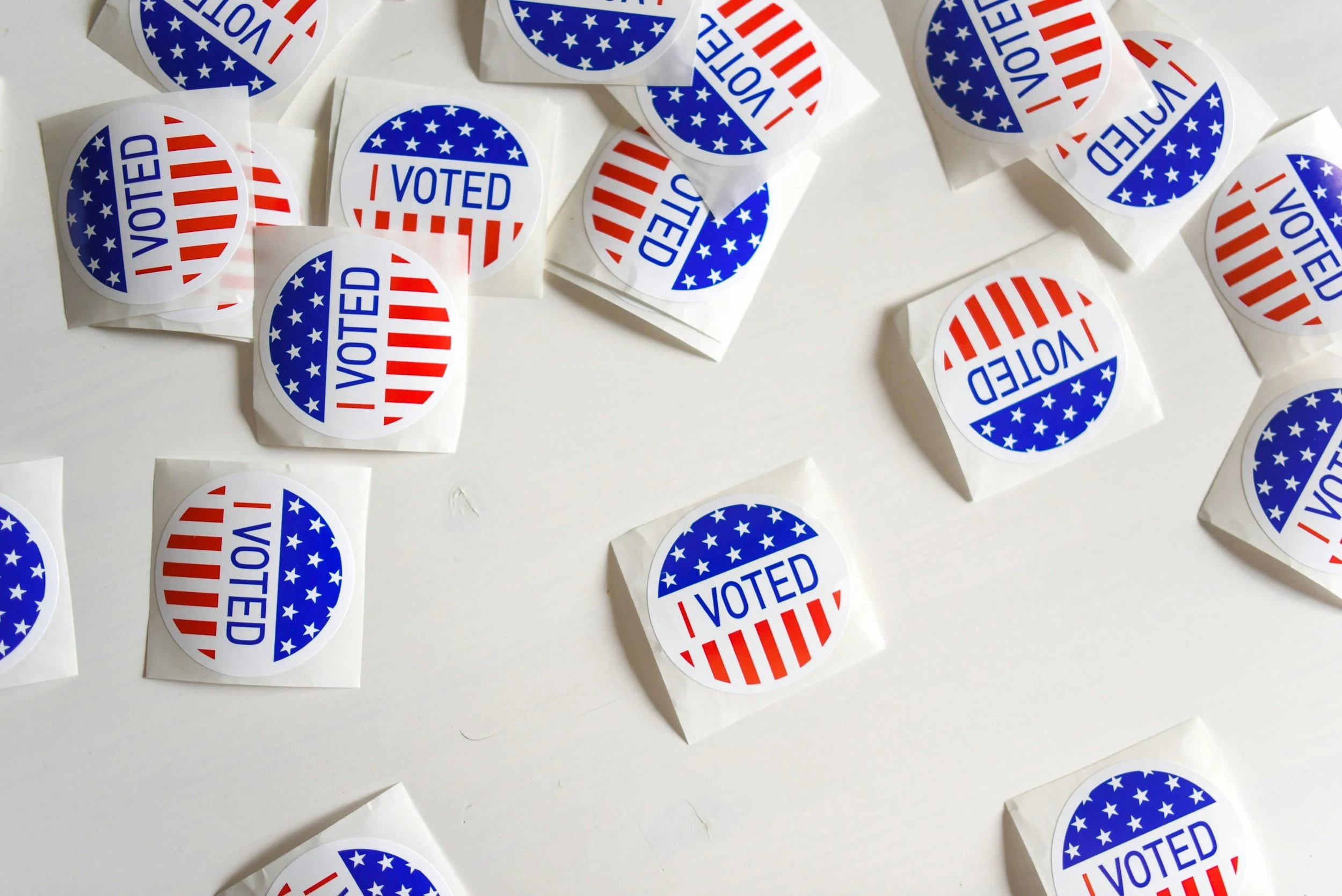
Americans vote on Tuesday, November 3, and clients are already asking what the results could mean for their portfolios.
The questions are understandable: What happens if control of the House changes, or if the Senate changes hands as well?
I do not intend to predict the outcome. Election forecasts are uncertain, and even an accurate political forecast does not necessarily lead to an accurate market forecast. Instead, I find it more useful to consider the historical record and the economic conditions likely to influence investment results.
The Rising Cost of Political Campaigns
Spending on the 2026 midterm elections is expected to reach record levels. According to AdImpact, political advertising alone is projected to total $11.6 billion, approximately 30% more than during the 2022 midterms and even exceeding advertising expenditures during the 2024 presidential election. That figure includes advertising by candidates, political parties, and outside organizations, but does not capture the full cost of running campaigns.
A growing share of political funding is coming from a relatively small number of extremely wealthy individuals and families. According to an analysis by Americans for Tax Fairness Action Fund, billionaire families and companies under their control contributed more than $1.7 billion to the 2026 election cycle through August, approximately 70% more than during the entire 2022 midterm cycle. Just 15 billionaire families accounted for approximately $962 million of those contributions. Much of this money flows through super PACs, which can accept unlimited contributions to support or oppose candidates independently of their campaigns.
These figures illustrate how much money is being committed to influencing the election, but spending does not guarantee electoral success or provide a reliable indication of subsequent market performance. For investors, the more relevant question is how any resulting policy changes might affect the economy and corporate profitability.
What History Tells Us About Midterm Elections
Midterm elections can create uncertainty for investors, especially when control of Congress is in question. Market performance in the months leading up to the vote has often been uneven, although the election is only one of many influences on stock prices.
Once the results become clearer, investors can begin assessing the policy implications rather than speculating about every possible outcome. That may remove one source of uncertainty, but it does not eliminate the economic risks facing markets.
Since 1950, the S&P 500 has averaged a 15.4% price return in the twelve months following a midterm election, according to Capital Group. A longer historical record shows a similar pattern. Going back to 1874, the U.S. stock market rose in the year following 32 of the last 38 midterm elections, according to an analysis by The Motley Fool. This is not to imply that midterm elections translate into stock market gains; there is correlation, but not causation—many other factors contribute to these results, and the elimination of political uncertainty is not insignificant.
The president’s party has historically tended to lose House seats in midterm elections, doing so in 20 of the 23 midterms since 1934. Changes in congressional control are therefore familiar political events, not unprecedented developments for investors.
Historically, divided government has not necessarily been unfavorable for investors. Legislative gridlock can limit significant changes in tax, spending, and regulatory policy, providing businesses and investors with a degree of predictability. That does not mean divided government produces better market returns; economic conditions and corporate earnings remain much more important over time.
Past results offer perspective, not a forecast. Neither the party controlling Congress nor the presence of divided government, by itself, determines long-term investment performance.
What Stays the Same on November 4
Regardless of which party controls the House or Senate after November 3, I will continue to focus on the economic and market developments that have the greatest bearing on our clients’ portfolios.
Earnings. Corporate profitability remains central to long-term equity returns. FactSet reports that third-quarter S&P 500 earnings are running 29% above a year ago, marking a third consecutive quarter of growth above 25%, while revenue is up more than 12%. Technology and spending associated with artificial intelligence account for a substantial portion of that growth. The durability and breadth of earnings growth will matter well beyond Election Day.
Inflation. September’s Consumer Price Index rose 3.7% from a year earlier, while core inflation, excluding food and energy, was 2.6%. Gasoline averaged $4.33 per gallon in September, contributing to pressure on the headline measure. Energy prices respond to global supply and demand, geopolitical developments, and other factors that cannot be quickly resolved through an election.
The Federal Reserve. Following its September increase, the Fed’s short-term policy rate stands at 3.75% to 4.00%. Its next meeting is scheduled for October 27–28, just before Election Day, and traders remain divided about another increase. Inflation, employment, and the broader economic outlook will be central to that decision.
Long-term interest rates. The 10-year Treasury yield closed at 5.10% on October 15. Higher Treasury yields increase borrowing costs for households and businesses while also placing pressure on equity valuations. Although fiscal policy can influence longer-term interest rates, Treasury yields are ultimately determined by market forces, including inflation expectations, economic growth, and investor demand.
Geopolitics. Tensions between the United States and Iran have contributed to an oil-market risk premium this year, while tariffs continue to affect trade and business decisions. These developments will remain relevant regardless of the election result.
Fiscal policy is an area where congressional control could make a meaningful difference. A Democratic House or Senate might slow or reshape Republican tax and spending proposals, while continued Republican control could make their passage easier. Even then, the legislative process takes time, and the economic effects of new policies often unfold gradually.
Portfolio Strategy in an Uncertain Environment
For me, portfolio construction begins with the client’s financial plan. Investments serve a practical purpose: supporting the life a client wants to live and the financial commitments that come with it. That purpose does not change with an election.
At HIGHLAND Financial Advisors, we use the plan to understand the timing and amount of future spending, the resources available to meet it, and the risks a client can reasonably accept. Those considerations guide portfolio decisions more consistently than the daily news cycle.
With geopolitical uncertainty, persistent inflation, and higher interest rates, several aspects of portfolio management deserve particular attention.
Maintain appropriate near-term reserves. For clients drawing from their portfolios, we generally maintain cash and short-term bond reserves intended to cover the next one to two years of withdrawals. These reserves can reduce the need to sell stocks during a market decline. Short-term Treasuries and money market funds currently offer yields near 4%, making liquidity more productive than it was for much of the previous decade.
Reassess the role of bonds. With the 10-year Treasury yield around 5%, high-quality bonds can again contribute meaningful income to a diversified portfolio. Higher yields also improve the income available from new purchases, even though existing bonds may lose market value when rates rise.
Account for inflation. Inflation is particularly important for retirees because it gradually reduces what their savings can buy. Rising costs for groceries, healthcare, housing, and other essentials can put pressure on a financial plan even when account balances appear stable. Equities have historically provided an important source of long-term growth, although their returns are variable and they do not offer a guaranteed inflation hedge.
Diversify across markets and investments. A relatively small number of large technology companies accounts for much of the S&P 500’s recent earnings growth. We believe it is important to consider that concentration alongside opportunities across company sizes, investment styles, and geographic regions. Diversification cannot eliminate losses, but it can reduce dependence on any single source of return.
Rebalance when appropriate. Portfolio allocations change as different investments rise and fall. Periodic rebalancing helps keep risk aligned with the financial plan and can create opportunities to trim positions that have grown disproportionately while adding to areas that have become underrepresented. The decision is based on portfolio objectives, not election headlines.
What I Am Telling Clients This Week
Participating in an election is important, but I would not recommend changing a long-term investment strategy simply because of an anticipated political outcome.
Investors who move to cash before an election must make two decisions. They must choose when to get out. Then they must choose when to get back in. Few people get both right.
An investor who moves to cash ahead of an election has to make two successful timing decisions: when to sell and when to reinvest. Getting both decisions right is difficult, particularly when markets can react quickly to unexpected news.
If the election is causing concern about your investments, that is a good reason to speak with your advisor. We may want to revisit your liquidity needs, risk tolerance, or financial plan. It is not, by itself, a reason to abandon a carefully considered investment strategy.
Election results may create short-term market volatility, particularly if the outcome differs from expectations. Over longer periods, corporate earnings, inflation, interest rates, and economic growth will continue to have a much greater influence on investment results.
Reed C. Fraasa is a CERTIFIED FINANCIAL PLANNER™ and founder of HIGHLAND Financial Advisors, a Fee-Only financial planning firm that offers comprehensive financial planning, retirement planning, and investment management. Reed has 30 years of experience as a fiduciary advisor and is the author of The Person is the Plan®, a unique financial planning process. Reed was a frequent guest contributor on PBS Nightly Business Report and has been featured in the New York Times, Wall Street Journal, and Star Ledger newspapers.
The foregoing content reflects the opinions of Highland Financial Advisors, LLC, and is subject to change at any time without notice. Content provided herein is for informational purposes only and should not be used or construed as investment advice or a recommendation regarding the purchase or sale of any security. There is no guarantee that the statements, opinions, or forecasts provided herein will prove to be correct.
Past performance may not be indicative of future results. Indices are not available for direct investment. Any investor who attempts to mimic the performance of an index would incur fees and expenses, which would reduce returns.
Securities investing involves risk, including the potential for loss of principal. There is no assurance that any investment plan or strategy will be successful or that markets will act as they have in the past.
The above article was written with the assistance of artificial intelligence (AI).